We talk about “taste” all the time. We say someone has great taste in movies, an interior designer has impeccable taste, or a founder built a product with real taste.
But if you try to pin down what taste actually is, it gets slippery. It’s not just a fancy word for “expensive,” and it’s definitely not just about choosing a pretty color palette.
So, what is the anatomy of taste? And why is it so important in the world of AI, where taste is considered as the (only) moat a founder can have, given that building is commoditised.
Taste is an opinionated filter
At its core, taste is a deeply honed, human-centric opinion on what quality looks, feels, and sounds like. Think of the world as a chaotic waterfall of raw data, features, and possibilities.

Taste is the filter. It’s the ability to look at a hundred different options and say: “This one matters; the other ninety-nine are just noise.” While data and algorithms tell you what is popular (the average of what people already do), taste predicts what will delight people—even if they haven’t realized it yet. It balances empathy for the human experience with the bravery to reject unnecessary complexity.
And what is it a function of? I believe, a deeper understanding of customers, their lives, the different personas, their JTBDs and eventually a love for observing things and world around you.
Taste in the Wild: 3 Unique Examples
To understand taste, look at the moments where someone chose human intuition over raw logic or industry standards.
1. iPod
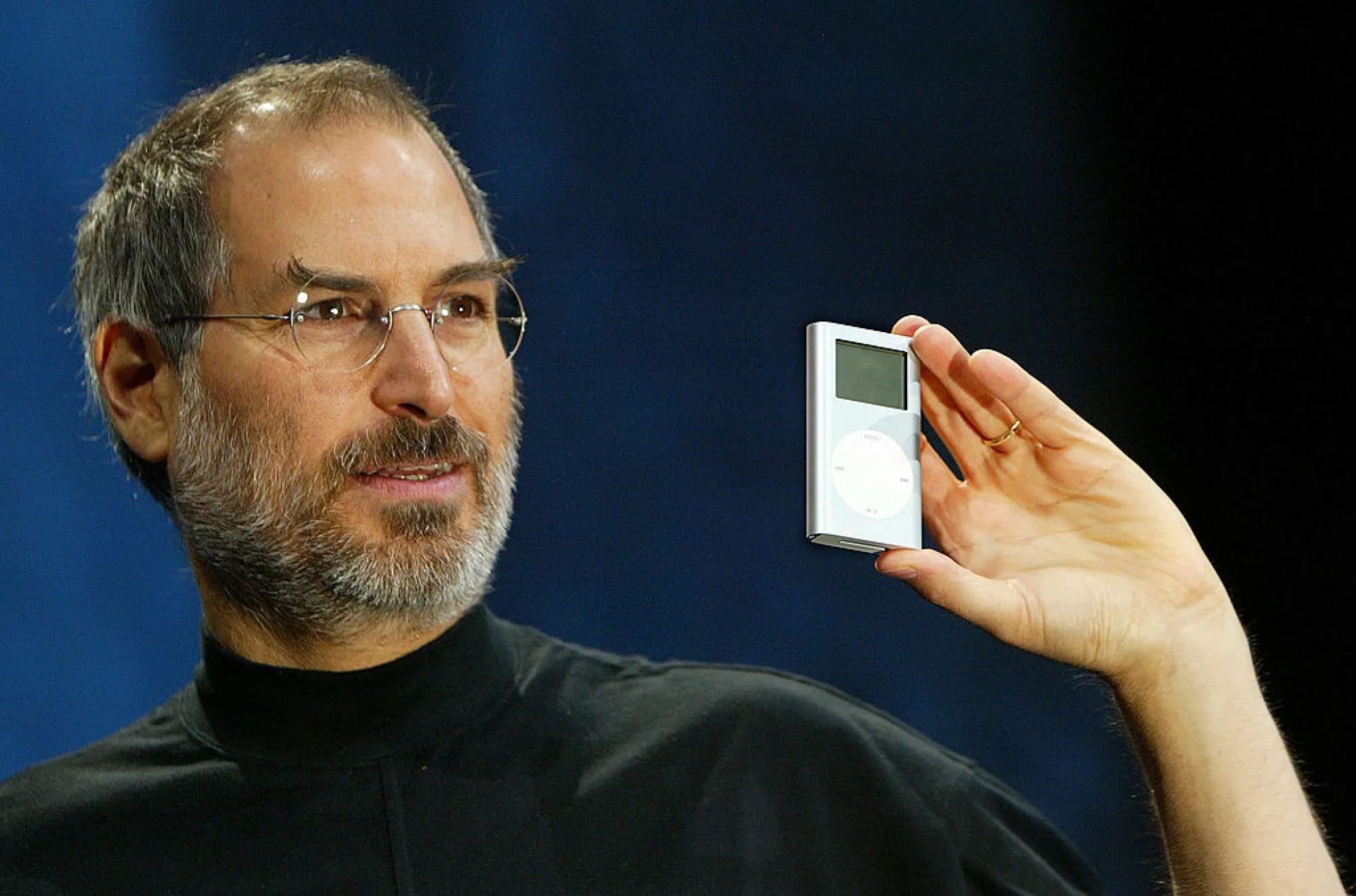
When Steve Jobs walked onto a stage in 2001 and introduced the original iPod, he didn’t just launch a piece of hardware. He gave the world a masterclass in what product taste actually means.
To understand why, you have to look at how every other tech company at the time was pitching their MP3 players.
Technical Spec vs. Human Story
In 2001, the standard industry practice was to market gadgets by their technical data sheet. If a competitor had launched that exact same device, the billboard would have read:
“5GB Storage Capacity, USB 1.1 Connectivity, and 185-gram Form Factor.”
That is an engineering fact. It is accurate, it is optimized, and it is completely devoid of taste. Why? Because it forces the human brain to do the heavy lifting. The average person doesn’t know what a gigabyte feels like. They don’t know how many audio files fit into five thousand megabytes.
Apple’s taste manifested in a single, legendary phrase:
“1,000 songs in your pocket.” (Note: This evolved to 10,000 songs with later high-capacity iPods).
Why this is pure taste
Taste is the art of translation. It’s taking raw, cold capability and reshaping it into an emotional benefit that a human being can instantly visualize.
The Competitor’s Approach (No Taste): Focuses on the machine. “Look at what our engineers built.”
Apple’s Approach (Taste): Focuses on the lifestyle. “Look at how your relationship with music is about to change forever.”
By framing the device around the volume of your music library rather than the size of the hard drive, Apple bypassed the analytical brain and went straight for the gut. They understood that you didn’t want to buy a storage unit; you wanted to carry your entire identity around with you.
The Modern Lesson for AI founders.
Whether you are writing a landing page for a software product, pitching a startup, or creating content, the “10,000 songs” rule is your ultimate guardrail.
Stop telling people how the engine works (e.g. AI agents for <X>). Taste means having the restraint and empathy to tell them exactly where the car is going to take them.
2. In Gaming: Nintendo’s The Legend of Zelda: Breath of the Wild
When this game was being developed, the trend in the gaming industry was to fill open-world maps with thousands of checklist icons, mini-maps, and blinking arrows telling the player exactly where to go. It was highly optimized, but it felt like a chore list.

Nintendo exercised incredible artistic taste by hiding the UI. They designed the physical landscape (mountains, smoke plumes, ruins) to naturally catch the player’s eye and spark curiosity. They trusted human nature over digital hand-holding, transforming a digital space into a genuine adventure.
3. “Working Backwards” (Amazon’s PRFAQ framework)
Taste isn’t just for hardware; it applies to how you build software and businesses. Take the famous Amazon framework of writing the product press release before writing a single line of code.
It takes taste to halt engineering and say, “If we can’t explain why a human being would care about this in a simple page, we shouldn’t build it.”
Taste is the Ultimate Guardrail
Whether you are writing an essay, designing an app, or cooking a meal, remember this: Data can optimize, but only taste can compose. The next time you are building something, don’t just ask, “Is this technically correct?” or “Does the data support this?”
Ask the harder, tastier question:
“Does this have a soul?”
This becomes all the more critical in today’s world where one can build anything using AI - but all that matters is the ‘taste’ to know when to stop.
The concept of TASTE that you have so brilliantly explained is also there in your post :) Loved reading it and kept on applying the OPINIONATED FILTER in my mind to my work. Thanks!