

So far, most of AI success story has been on SAAS or prosumer space, but I believe the next big opportunity will lie in consumer AI.
If you look at it, the consumer tech space hasn’t seen anything big (after TikTok) in the last 7-8 years (at max, character.ai / companions were the only notable launches).

Cracking distribution has been a huge pain for new startups (FB/Insta.Twitter/G won’t let you in anymore) and even VCs have realised this. Which is why they have invested more in transactional plays (for e..g lending businesses) vs engagement centric businesses like gaming/social etc.
For over a decade, building consumer products felt like “lightning in a bottle”, often hampered by distribution channels closing down. But AI has created a massive opening, making previously impossible ideas viable. [Gary Tan, YC]
But I believe, the landscape for consumer startups is fundamentally shifting as people are getting warmed up to AI and different AI-native content formats (Ghibli, anyone?).
Importantly, AI actually a whole lot of automation that was just not possible earlier (for e.g. you upload a pic of a product → AI will get all the details (condition, model number, approx price) , creating an instant wow experience in a recommerce platform).
So how do you go about spotting consumer opportunity in AI space? A few notes (plus learning’s exploring AI consumer ideas).
The AI Opportunity: Finding the (un)touched niche
The biggest opportunity right now is not inventing a new category from scratch, but aggressively injecting AI into areas that were previously considered “done” or “graveyards”.
Re-examine the “Graveyard” Categories
Look at opportunities that have been previously overlooked or “written off” / deadpooled.
Categories that saw heavy investment early on but reached a perceived “baked and done” status (like mail apps or browsers) are ripe for total rebuilding because AI presents brand new possibilities.
“What if I could inject a powerful AI model into this stack and completely change the user experience?”.
The “Dark Data”
A massive area of untapped potential lies in layering LLMs, photo, image, video, or music models on top of large data sets that are currently untouched or inaccessible to users.
The data can be publicly accessible, or, even more powerfully, private and personal.
For example. I do believe that Ghibli was a ploy to get more (millions of) data from consumers.
After all, Mo data is Mo moat.
Unlike Enterprise software where lock-in is often a moat, consumer tech has no such thing.
Doing non-AI, i.e. unscalable things to hit growth
When facing a harsh growth goal, you may have to do things that don’t scale. Paul Graham is infinitely right - this is how you confirm user pull.
For example, If users are asking for a crucial feature that requires manual work (like Anchor.fm manually creating and submitting RSS feeds for every user), do it.
Use this temporary, unscalable solution to achieve growth, prove the model, and then figure out how to automate or scale it.
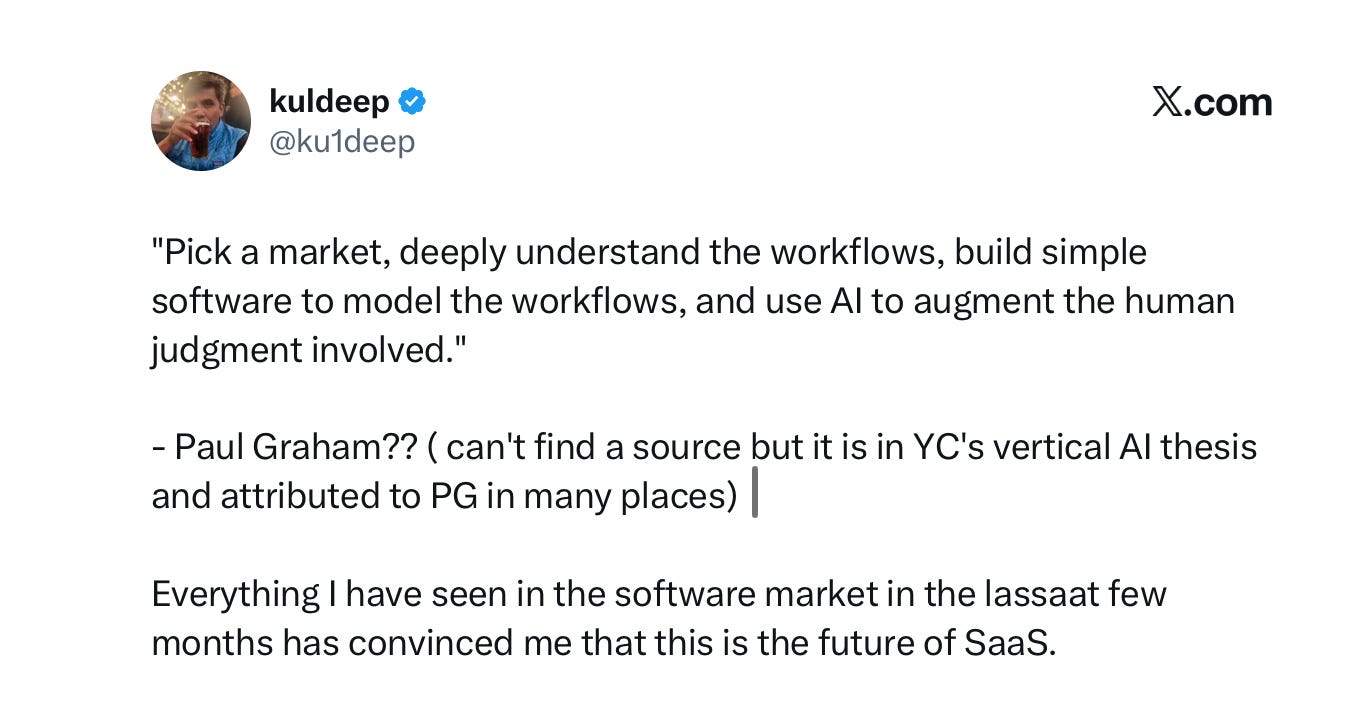
Unlike SAAS or enterprise where AI mistakes are often tolerable (in most cases due to lock-in), there is no such thing in consumer AI.
AI accuracy is a loaded term and consumer expectations are WAAAYYY higher compared to what AI can deliver (which is why ChatGPT is and will always bleed).
Taste and Speed are your moats
While AI makes building easier, it also means the largest labs (like OpenAI, proven by Sora’s capabilities) can build and ship excellent net new products quickly.
Focus on great taste and craft in your product to stand out. In this hyper-competitive environment, you have to move fast and be aggressive; you cannot “sit back and iterate”.
Even though AI models are getting vast capabilities, the craft and taste applied in the prompt writing and user experience are still where human builders win.
What’s your take? What are you building?